Best video slots Australia 2026: the licensed machines in pubs and clubs, and why every offshore site is illegal
 Available in US
Data current as of 23 September 2026 against the Australian Communications and Media Authority’s published blocking list and formal warnings register.
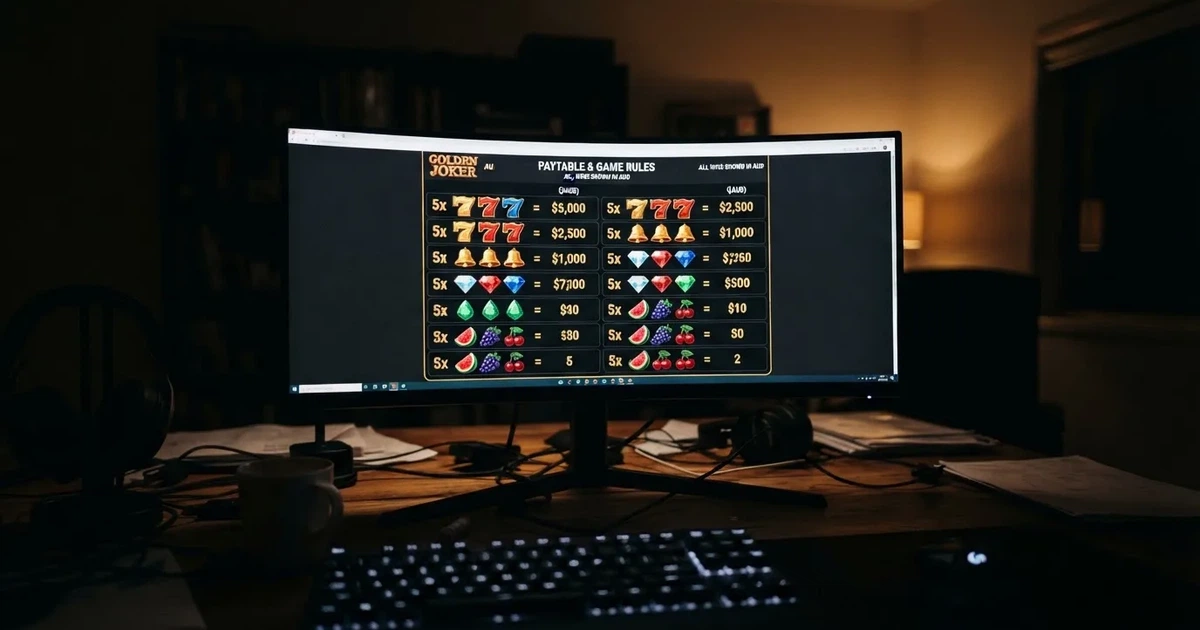
A punter asking for “the best video slots” in Australia is really asking two questions at once, and the two answers pull in opposite directions. One is about the game itself — multi-reel, multi-feature video slots with bonus rounds, free-spin triggers and animated paytables — which is easy to describe. The other is about where it can be played for real money in Australia, which is harder, because for online casino games the short answer is “nowhere legal.” The Interactive Gambling Act 2001, tightened by the Interactive Gambling Amendment Act 2017, makes it an offence to provide online casino games or online pokies to a person physically in Australia. No state or territory issues a licence for them. What is licensable is wagering on racing and sport placed before the event, lotteries and keno — and the licensed electronic gaming machines (EGMs) in pubs, clubs and the state casinos. Everything an offshore casino site offers under the heading “video slots” sits on the wrong side of that line. The Australian Communications and Media Authority (ACMA) has been issuing formal warnings and directing Australian internet service providers to block such sites for years, and the blocking round reported on 26 June 2026 alone added another twelve domains.
The page below works through that gap on the reader’s behalf. The opening sections cover what a video slot actually is and how it differs from a classic three-reel machine, because the format matters whether the machine is in a Sydney pub or in a Crown Melbourne bank. The legal and responsible-gambling shelves explain what the IGA actually prohibits and what player-protection tools apply onshore, since an offshore site answers to neither. The mobile and games shelves cover how the modern format performs on a phone and what the catalogue of bonus mechanics looks like. The operator write-ups that follow are not a ranking — every brand named has been the subject of an ACMA formal warning, and the section closes with the arithmetic that exposes what a “free spin” offer actually costs in turnover. The shortlist and comparison shelves then turn the same scrutiny on the criteria a reader might otherwise use to pick a site, ending with a short FAQ.
The angle running through the page is cost. A reader who understands what a feature costs — a bonus round in expected loss, a wagering requirement in turnover, an offshore brand in recourse — is a reader who can choose between options that look identical on the surface. Every block below is written to make that cost visible.
Table of Contents
- The format itself: what makes a video slot a video slot
- What is licensed, what is prohibited, and what the ACMA has done about it
- Where the protection actually sits: BetStop, the Helpline, and what does not extend offshore
- Bonuses and free spins: the inducement, the wagering requirement, and what it actually costs
- Mobile play: the touchscreen question and what changes between desktop and phone
- Specific games, providers and the catalogue behind a “video slots” tab
- How a shortlist is actually built: the criteria that separate one option from another
- The featured set: every brand the ACMA has warned, in the order the regulator acted
- The blocking rate, and what a “fresh round” actually changes
- Picking the best licensed EGMs: state-level criteria
- Frequently Asked Questions
The format itself: what makes a video slot a video slot
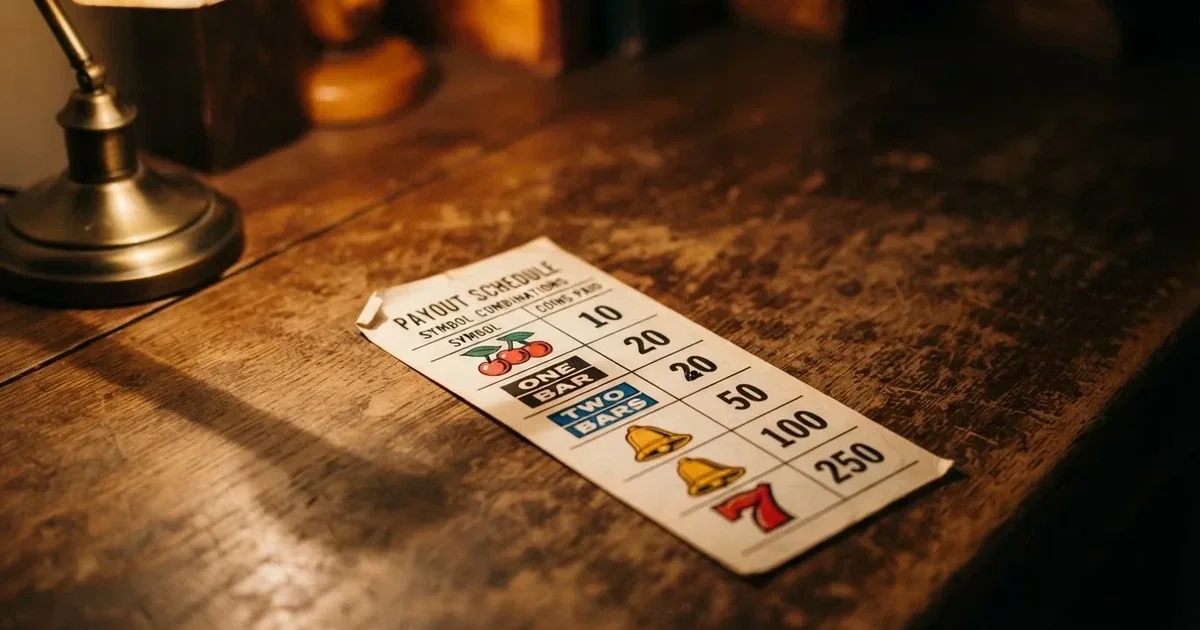
Charles Fey of San Francisco built the first automatic slot mechanism in the late nineteenth century — three reels, five symbols (horseshoes, diamonds, spades, hearts and the Liberty Bell), and three bells in a row paid the top prize of ten nickels. The Liberty Bell is the ancestor of every machine since. The mechanical format stayed dominant for most of the twentieth century: Bally’s Money Honey in 1963 added a bottomless hopper and automatic payout of up to 500 coins without an attendant, and the rest was refinement of the same idea. The format that the search term “video slots” refers to begins in 1976, when Fortune Coin Co. in Kearny Mesa, California, replaced the physical reels with a video display driven by a microprocessor. The cabinet, the lever, the sound effects and the payouts stayed; the spinning symbol was now a screen.

That screen made everything that came after possible. A mechanical three-reel machine with about ten symbols per reel offers roughly one thousand possible combinations. A modern video slot can run five or more reels with fifty or more symbols per reel, producing odds against a top combination as high as 300 million to one. The increased capacity is what allows the features the term “video slot” implies: bonus rounds triggered by scatter symbols, free-spin modes with modified reel strips, cascading wins, expanding wilds, pick-a-prize mini-games and progressive jackpots. None of that is technically impossible on a mechanical machine, but the screen and the random-number generator underneath it is what makes the features practical to build.
The licensed EGMs in Australian pubs and clubs are overwhelmingly video slots of this kind. New South Wales had 87,298 pokies-style machines outside casinos as of June 2023, Victoria 26,380 in 2021–22, Queensland 21,122 in October 2023, South Australia 11,672 in September 2023 and the ACT 3,587 in November 2023. The two states that hold the bulk of the country’s installed base — NSW and Victoria — are also the two with the most developed harm-minimisation regimes around them, including mandatory pre-commitment in some venues and player-information displays on every machine. The count matters for the comparison further down: the same machine format is the dominant product in the onshore legal market, and it is also the dominant product the offshore sites advertise. What separates them is not the game, it is the licence and the recourse a player has if something goes wrong.
A modern video slot’s volatility — how widely the payouts swing around their average — is set by the game’s designers and varies even within a single provider’s catalogue. A low-volatility title pays small amounts often; a high-volatility title pays rarely and larger when it does. A game’s return-to-player (RTP) percentage is the share of money wagered that the machine is programmed to return over a very long run; the rest is the house edge. Neither figure tells a reader what any single session will feel like, because both are averages over millions of spins. They tell a reader what kind of game they are sitting down to — a steady drip or a long dry stretch punctuated by occasional larger hits — and which one to pick on a given budget.
What is licensed, what is prohibited, and what the ACMA has done about it
The Interactive Gambling Act 2001, as amended in 2017, prohibits the supply of online casino games (including online pokies and table games) and in-play betting to customers in Australia. The prohibition targets the provider, not the individual player, and it is enforced by the ACMA. The Act does not prohibit wagering on racing and sport placed before the event — that is licensable and is licensed in practice by the Northern Territory Racing and Wagering Commission, which regulates 52 of Australia’s online bookmakers (Sportsbet, Bet365, Ladbrokes among them) and operates with no full-time staff, meeting once a month in Darwin. Lotteries and keno are licensed separately by the states. Casino-style games for online play are not licensed anywhere.
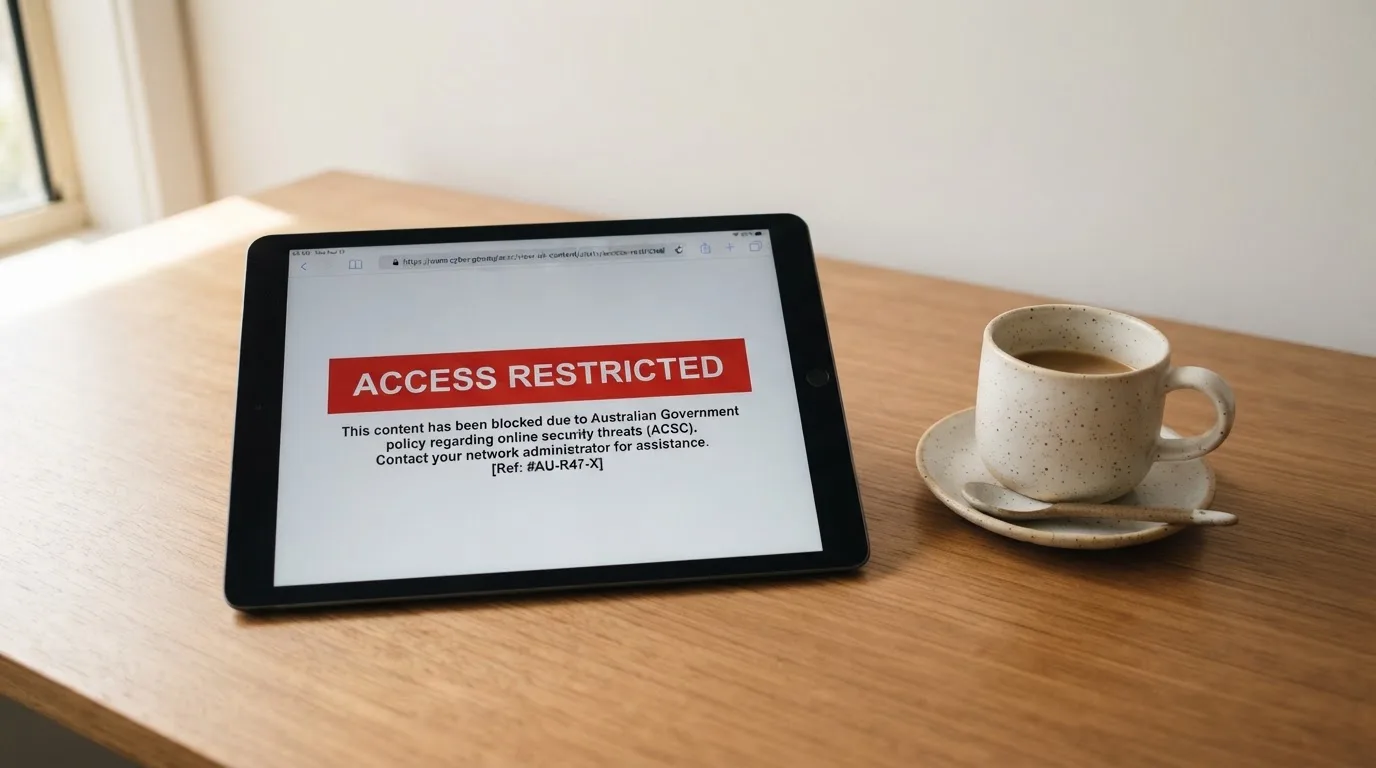
Enforcement against offshore operators runs along two lines. First, formal warnings: the ACMA publishes a register of warnings issued to operators it judges to be providing prohibited services to Australians. Second, blocking requests: the ACMA directs Australian ISPs to block domains. As of the round reported on 26 June 2026, a cumulative 1,751 illegal gambling and affiliate marketing websites had been blocked since the first blocking request in November 2019, and more than 230 unlicensed services had left the Australian market since 2017. The 26 June 2026 round alone added twelve more: 7Signs, ChromaBet, Donbet, Duospin, Freshbet, Slots Gem, Jacks Club, Lucky Start, Pointsbetz.com, Spinrise, Vinyl Casino and Wildsino. H2 Gambling Capital’s 2025 report estimates Australians lose about A$3.9 billion a year to illegal gambling sites, and that the share of gambling going through legal channels has fallen from 74% in 2021 to 64%.
The financial cost is the headline. The structural cost is what a balance sitting on a blocked site looks like: an offshore casino gives no Australian consumer protection, no complaints body and no recourse if a withdrawal is refused. The ACMA can block a domain and walk away — the player’s money is now on a domain Australians can no longer reach. A reader weighing an offshore casino against an onshore alternative is not weighing two ways to play the same game; they are weighing a licensed machine in a venue with mandatory harm-minimisation tools against an unlicensed site with no complaint route.
Where the protection actually sits: BetStop, the Helpline, and what does not extend offshore
BetStop — the National Self-Exclusion Register — went live in August 2023 and lets a person exclude themselves from every Australian-licensed online and phone wagering service with a single registration. It is the country’s main self-exclusion tool, and it is mandatory for licensed wagering operators to honour. It binds Australian-licensed services. An offshore casino is not on it. A punter who has registered with BetStop and then opens an account with an offshore casino has not excluded themselves from that casino; the casino has no obligation to check the register, and the player has no Australian body to complain to if the casino ignores an exclusion request sent directly.

The National Gambling Helpline — 1800 858 858 — is free, available 24/7 and offers chat support through Gambling Help Online. It is the right number for a punter who feels the gambling is getting away from them, regardless of whether the gambling is happening in a pub, on a phone or on an offshore site. The counselling is funded centrally and is not tied to any operator.
The payment regime that applies to licensed wagering since 11 June 2024 makes the offshore distinction visible at the cashier. Credit cards, credit-related products and digital currency are banned as payment for licensed online wagering; the legal routes are debit card, bank transfer, PayID/Osko and BPAY. A site that asks an Australian customer for a credit card or a crypto deposit is operating outside the Australian rules by definition, because no Australian-licensed wagering service can take either. Penalties for licensed operators taking banned payment methods run up to A$247,500. The payment-method test is the simplest single check a reader can run before doing anything else with a site.
Bonuses and free spins: the inducement, the wagering requirement, and what it actually costs
The free-spin and bonus-round vocabulary on offer pages — “100 free spins,” “200% match,” “bonus credits on first deposit” — is inducement copy, and the cost of the inducement sits in the small print rather than in the headline number. Two conditions recur across the offshore market and recur because they are the mechanism that converts the headline into the operator’s expected return.
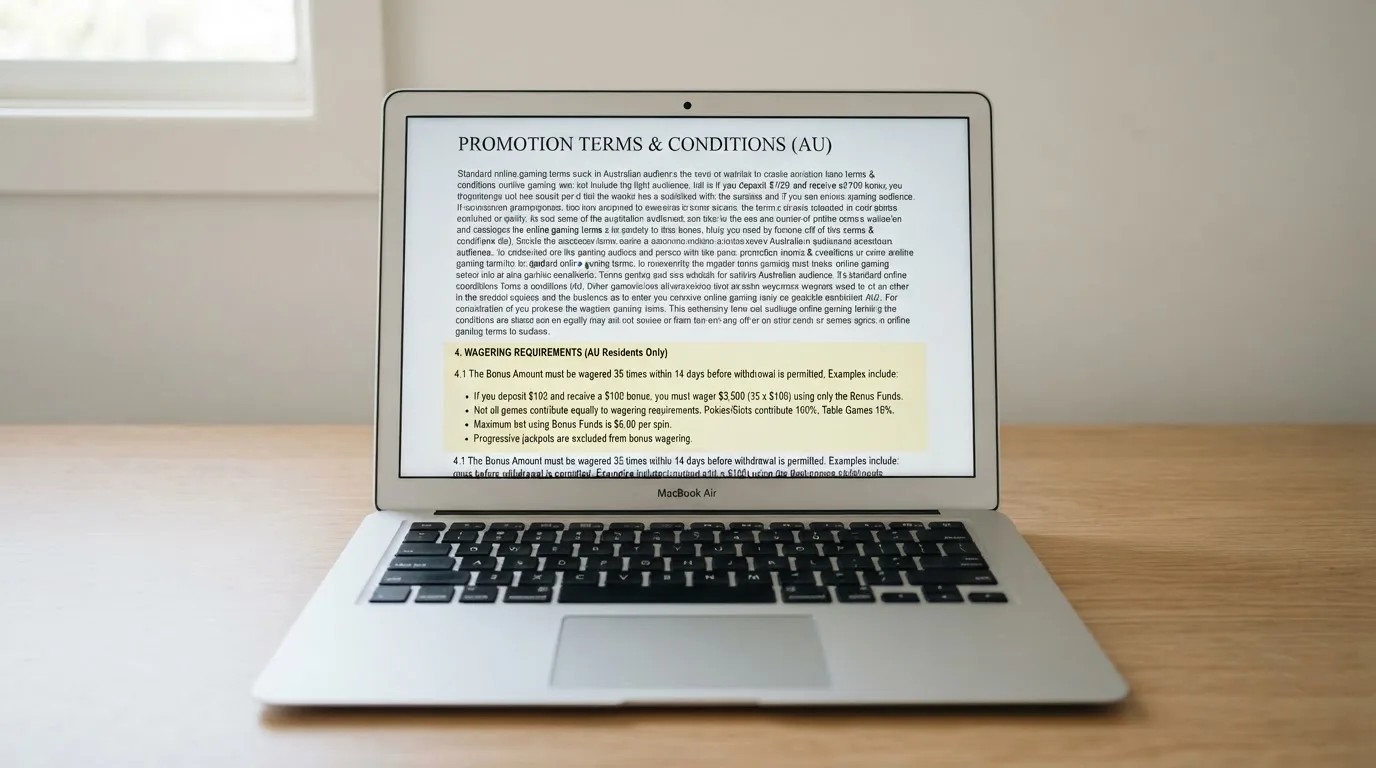
The first is the wagering requirement (also called a playthrough or rollover). A bonus of A$100 with a 40x wagering requirement means the player has to place A$4,000 in qualifying bets before any winnings from the bonus become withdrawable. Some offers carry the multiple on the bonus alone, others on the bonus plus the deposit, and a few on the deposit alone — each variant changes the effective multiplier by a factor of two or three. The required turnover is straightforward arithmetic: bonus × multiple = turnover.
The second is the game-weighting table. Slots almost always contribute 100% of each bet to the wagering requirement. Table games often contribute 10–20%, and live dealer games sometimes nothing. The reason for the weighting is the house edge: a slot at 96% RTP contributes 4% of every bet to expected operator profit; a blackjack hand at 0.4% house edge contributes roughly ten times less. The operator prices the bonus to the contribution rate, and a punter who clears the wagering on blackjack will find the turnover does not move at the speed the small print implied.
The third is the maximum cashout cap. A free-spin offer that pays “up to A$500 in bonus credits” routinely carries a clause stating that winnings from the free spins are capped at, say, A$100 or A$200 once wagering is complete. Above the cap, the winnings are forfeit. This clause is the part that turns a headline “100 free spins, win up to A$500” into a headline that pays out, in practice, a smaller fixed amount. None of these clauses are deceptive in the legal sense — they are written in the terms — but the marketing copy is built around the figure before the cap.
The arithmetic for what a typical bonus costs a player goes like this. Assume a bonus of A$100, a 40x wagering requirement on the bonus alone, all play on a video slot at 96% RTP, and a stake of A$1 per spin. Required turnover: A$100 × 40 = A$4,000. Spins to clear: 4,000. At five seconds per spin, that is 20,000 seconds, or about 5.6 hours of continuous play. Expected loss over those 4,000 spins at 96% RTP: A$4,000 × 4% = A$160. The headline offer is A$100 in bonus value; the expected cost of clearing it is A$160. The offer is negative expected value by A$60 before the player has spun once. The bonus is, in this sense, the operator paying the player A$100 to hand over A$160 of expected loss in return — a transaction that prices itself in the small print rather than in the headline.
A reader doing this arithmetic for a real offer they have been shown will get a different set of numbers, because the bonus amount, the multiple, the stake, the RTP and the cashout cap are all specific to the offer. The shape of the result is the same: every bonus is priced so that the expected loss during clearing exceeds the bonus paid in, and the margin between them is the operator’s edge on the inducement. The inducement is the sales mechanism, and the small print is where the price is set.
Mobile play: the touchscreen question and what changes between desktop and phone
The modern video slot is built in HTML5 rather than Flash, which means the same code runs on a desktop browser, a mobile browser and, where offered, a native app. From a regulatory standpoint this is the most important technical detail about the format, because it is what makes the offshore “online casino” offer trivial to put in front of an Australian punter — the site loads in a phone browser with no install required. From a player’s standpoint it is also what determines whether the experience on a phone matches the experience on a desktop.

Load times depend on the connection. A 4G connection in a metropolitan area will load a typical slot in two to five seconds; on a slower connection the same game can take ten or more. Touch controls substitute for click — the spin button is sized for a thumb, the bet adjuster is a slider rather than a +/- pair, and the paytable is collapsed behind a hamburger menu rather than always visible. Game features behave the same way as on desktop: bonus rounds, free-spin triggers and progressive jackpot counters are the same code path, and an autoplay function usually runs identically.
The differences that matter are practical. A phone screen shows roughly a quarter of the symbols a desktop monitor shows, and a payline that is obvious on a 24-inch display can be invisible on a 6-inch one until the player zooms. A bonus round with a pick-a-prize mini-game that needs precise mouse positioning becomes a tap on a phone, and the precision is coarser. The game itself does not change; the player’s view of it does. A reader who has only ever played on one device has not seen the full version of the game.
Browser versus app is the second axis. An app is faster to launch and may carry push notifications for new bonuses; a browser install is zero and the game is reachable from any device with no storage cost. Offshore casinos vary on whether they offer a native app at all — the Apple App Store and Google Play Store do not list real-money casino apps for Australian customers, so the app on offer is usually a PWA (progressive web app) or an APK sideload from the casino’s own site. A punter installing an APK from an unlicensed site is taking the operator’s word that the package is what it claims to be; the same is not true of an app distributed through an official store.
A final note on what mobile play does to a player’s sense of session length. A session on a desktop ends when the punter stands up; a session on a phone ends when the punter puts the phone down, and the threshold for putting the phone down is higher than the threshold for standing up. The gambler’s natural session break is eroded by the device, and that matters more for the bankroll than any of the technical differences above.
Specific games, providers and the catalogue behind a “video slots” tab
A video slots tab on an offshore casino site typically lists between 800 and 4,000 titles, drawn from a small set of providers whose games dominate the global online casino market. The same providers’ games also appear on the EGMs in Australian pubs and clubs, because the underlying game engine is the same product regardless of where it is hosted. The distinction, again, is in the licence and the venue — not the catalogue.
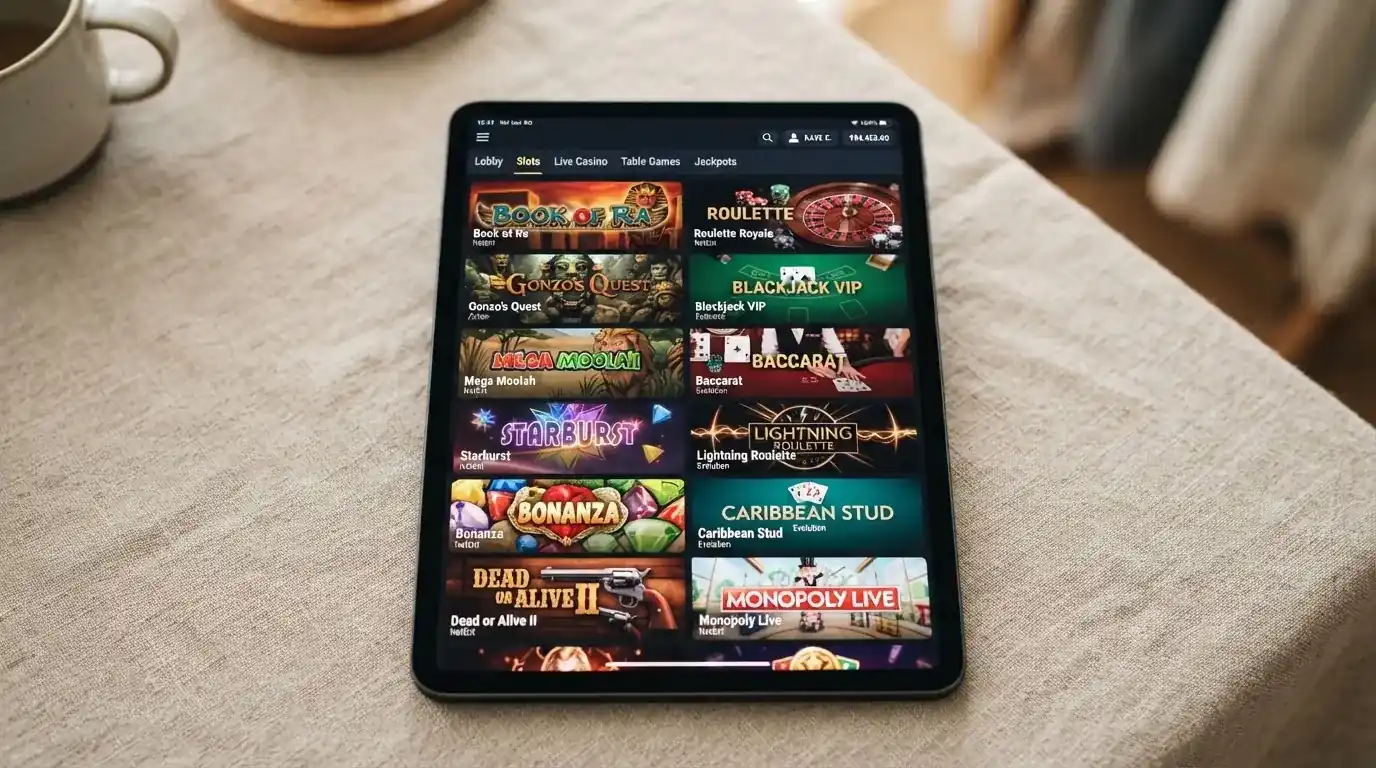
The shape of a typical modern title runs in a recognisable family. Five reels, three rows of symbols, twenty to fifty paylines running left-to-right (or, in cluster-pay games, anywhere on the grid). Low-paying symbols are card ranks (9, 10, J, Q, K, A) styled to fit the theme; high-paying symbols are theme-specific (a pharaoh’s mask, a dragon, a gemstone). The wild symbol substitutes for others; the scatter symbol triggers the bonus round. A free-spin round typically awards eight to fifteen spins, often with a multiplier (2x, 3x) attached, and sometimes a secondary symbol (an expanding wild, a sticky scatter) that changes the value of subsequent spins. A bonus round outside the free-spin mode is usually a pick-a-prize mini-game: the player chooses from a set of face-down tiles, each hiding a credit prize or a multiplier, and the round ends after a fixed number of picks or on a “collect” tile.
The volatility and RTP of any specific title are set by the game’s designers and published in the paytable or in the provider’s specification sheet. A low-volatility game might run at 96.5% RTP with a hit frequency (the share of spins that pay anything) of 35–40%; a high-volatility game might run at 96% RTP with a hit frequency of 20–25% and the bulk of the return concentrated in the bonus round. The same provider typically publishes the full range — Pragmatic Play, NetEnt, Microgaming, Play’n GO, BGaming and Evolution (for live dealer content) are names that recur across the catalogue. The relative weight of these names in an offshore casino’s library is one of the few honest signals a reader can use to judge the catalogue; a site offering 200 BGaming titles and ten from any other provider is leaning into a single relationship rather than a balanced library.
The licensed EGMs in Australia run a narrower set of providers, but the catalogue is much smaller per venue (a modern Australian pub might carry thirty to forty machines, drawn from a handful of providers) and the games themselves are regulated at state level. In NSW the regulator approves every game and every setting before deployment; in Victoria the VGCCC maintains a public log of approved rule changes, including the renaming of the “Perfect Pairs” blackjack side bet to “Crown Pairs” in December 2024 and the introduction of a “Free Bet” option with a “Pot of Gold” side bet in March 2024. The onshore library is therefore smaller per venue, but the games in it have been reviewed by a regulator with the authority to refuse them.
How a shortlist is actually built: the criteria that separate one option from another
A reader looking for the “best” video slots in Australia is reading the word “best” in one of two ways. The first is “best legal option” — which leads to licensed EGMs in pubs, clubs and Crown Melbourne or Crown Sydney, with no online alternative. The second is “best site for playing offshore” — which leads to unlicensed casinos, every one of which the ACMA has either warned or blocked. The criteria below apply differently to the two interpretations, and the page treats them separately.

For the legal onshore option, the criteria are limited because the choice is largely between venues rather than between operators. The relevant axes are: state-by-state maximum bet limits and load-up limits (NSW and Victoria have the most developed settings), the presence of mandatory pre-commitment tools, the availability of cashless card technology (in Victoria, the YourPlay system is in force; in NSW, similar measures apply to higher-risk venues), and the venue’s location relative to the player’s daily route. Two EGMs of the same title in two different venues are identical games; what differs is the harm-minimisation setting around them. The criterion that matters most is the player’s own pre-commitment decision, made before the session starts, because the venue does not enforce a limit the player has not set.
For the offshore option (which the ACMA has acted against in every case in the featured set on this page), the criteria that recur in marketing material — number of games, “licensed” in Curaçao or Anjouan, generous welcome bonus — are precisely the criteria a reader should distrust. A Curaçao licence binds the operator to the Curaçao regulator, not to Australia; an Anjouan licence binds it to neither. A welcome bonus carries the wagering requirement, the cashout cap and the game-weighting table described above. A reader who insists on ranking offshore casinos will end up ranking them on the small print, and the small print is rarely visible before sign-up.
The criteria that actually matter for an honest comparison of offshore brands are: whether the ACMA has acted against the brand and when (a brand the regulator has acted against in the last twelve months carries a higher blocking risk than one warned years ago and now quiet), the payment methods accepted (a brand accepting credit card or crypto from an Australian customer is operating outside Australian rules), the withdrawal route (bank transfer versus cryptocurrency, which is itself an indicator of how the brand expects the player to receive funds), and the responsiveness of customer support. None of these is visible on a banner ad; all of them become visible only after the player has opened an account.
The featured set: every brand the ACMA has warned, in the order the regulator acted
The eleven brands below are not a recommendation and not a ranking. Each has been the subject of an ACMA formal warning under the Interactive Gambling Act 2001 for providing prohibited services to people in Australia. They are written up because the ACMA wrote them up, and the order is the order in which the regulator published each warning. The verdict at the end of each block is the page’s judgement on what the brand is worth to a player who, despite the warning, is still considering it — and that judgement is the same in every case.

RocketPlay
The ACMA issued a formal warning to Pulsup Ltd over Rocketplay.com.au in March 2026, and an earlier warning to Dama N.V. covering the same brand went out in May 2022. Two warnings from two operators carrying the same domain is the most legible signal in the regulator’s file that the brand has simply changed the company on the paperwork when the regulator objected the first time. Online casino games cannot be licensed anywhere in Australia, whatever licence the site displays. The catalogue behind the brand leans on BGaming content, which is widely available on the licensed EGMs in Australian pubs and clubs under state regulator approval.
Verdict. Two ACMA warnings, fourteen months apart, on the same brand under different operator names — the site is the same site it was when the regulator first objected, and a player who signs up is betting the brand will quietly move again if the ACMA blocks the domain a second time.
Level Up Casino
The ACMA issued a formal warning to Dama N.V. over Level Up in May 2022 as part of a batch that also covered Bambet, Dazard, Rocketplay, Wild Tornado and Cobra Casinos. Four years on, the brand is still operating under the Dama N.V. umbrella, and the warning has not been followed by a blocking request against the Level Up domain specifically — though other brands from the same operator have since been cautioned. The catalogue behind Level Up lists BGaming titles prominently.
Verdict. A Dama N.V. brand that has held onto the same domain since the original 2022 warning, while sister brands have been re-warned — the most stable of the Dama N.V. set in regulatory terms, which is a low bar.
Woo Casino
The ACMA issued a formal warning to Dama N.V. over Woo Casino in March 2025, three years after the same operator was warned over a different set of brands. A brand that has been warned once and re-warned under a sister banner has a record the regulator has not dropped; the blocking list accumulates against the operator rather than the brand, and a future round that blocks Dama N.V. brands as a group is consistent with how earlier rounds have run.
Verdict. A second-warning brand under an operator the ACMA is still actively watching — the same kind of patient the regulator has acted on before.
Spirit Casino
The ACMA issued a formal warning to Dama N.V. over Spirit Casino in May 2025, two months after the same operator’s Woo Casino warning. Two warnings in two months is the cadence the regulator moves in once an operator is on its active list, and a third Dama N.V. brand in a fresh batch is a plausible-enough outcome that a player reading the page now should not treat the brand as a stable proposition.
Verdict. The most recently warned Dama N.V. brand on the regulator’s list — a blocking risk that is currently rising rather than falling.
National Casino
The ACMA issued a formal warning to Consolutetish S.R.L. over National Casino in July 2025. The brand also sits within the ACMA’s general enforcement focus on offshore operators providing prohibited services, and the regulator’s wider blocking action against Consolutetish-operated sites has been steady across the second half of the 2020s. Wikipedia lists the brand in its coverage of the offshore Australian-facing market.
Verdict. A 2025 warning from a regulator that has continued to act against the operator’s sister brands — same risk class as the recent Dama N.V. entries, with a different operator on the paperwork.
Bizzo Casino
The ACMA issued a formal warning to Consolutetish S.R.L. over Bizzo Casino in July 2025, in the same batch as National Casino. Bizzo had already been the subject of a 2022 formal warning to TechSolutions (CY) Group Limited and TechSolutions Group N.V., so the brand has been warned twice across two operators. Two operator changes on a single brand is the same pattern RocketPlay shows: the domain survives while the company on the paperwork rolls.
Verdict. Twice-warned, twice under a different operator name — a brand that has shown it will change the corporate wrapper rather than the product when the regulator objects.
Ignition Casino
The ACMA issued a formal warning to Bamboo Media over Ignition Casino in July 2025. Ignition sits in the same regulator batch as the National and Bizzo warnings, and Bamboo Media’s Australian-facing operations have been a recurring subject of ACMA correspondence through 2024 and 2025.
Verdict. A 2025 warning on an operator with a continuing ACMA correspondence record — a blocking round against the operator’s wider brand portfolio is the most likely next step.
Instant Casino
The ACMA issued a formal warning to EOD Code SRL over Instant Casino in February 2025. Instant Casino marketed aggressively into the Australian market in late 2024 and early 2025 on the strength of a Curaçao-issued licence, which is the licence type that recurs across every brand in the featured set and binds none of them to Australia.
Verdict. A brand that was being marketed hard into Australia in the period immediately before the warning — the marketing push and the regulator’s response fell within months of each other.
Jackbit
The ACMA issued a formal warning to Ryker B.V. over Jackbit in April 2026. Jackbit’s product line includes cryptocurrency deposit and withdrawal as the default funding route, which is a banned payment method for licensed Australian wagering and an indicator that the brand is operating outside Australian payment rules.
Verdict. The newest formal warning on the list and a brand whose default payment method is banned under Australian rules — both signals point the same way.
Casino Intense
The ACMA issued a formal warning to Sterplay Holding Ltd over Casino Intense in April 2025. Casino Intense also appears in ABC reporting and ACMA material as a brand with a multi-year Australian-facing marketing presence.
Verdict. A 2025 warning on a brand with an established Australian marketing footprint — neither new nor quiet, and neither makes it a safer choice than the others on this page.
Sky Crown
The ACMA issued a formal warning to Hollycorn N.V. over its Sky Crown and Blue Leo casino services, as published in a September 2022 PDF on the ACMA site. Sky Crown is the oldest warning on the featured set, and the brand has continued to operate under Hollycorn N.V. since — meaning the formal warning did not, on its own, end the brand’s Australian-facing activity.
Verdict. The oldest warning on the page, on a brand that kept operating after the warning — the regulator’s formal warning is a meaningful step but not a stopping one, and a player reading this section is reading about a brand whose ACMA history is the longest.
The blocking rate, and what a “fresh round” actually changes
The arithmetic behind the ACMA’s blocking action is the primary data point for this page. The regulator’s published record shows that a cumulative total of 1,751 illegal gambling and affiliate marketing websites have been blocked since November 2019, and the date of the first request. The 26 June 2026 round alone added 12 domains. This is not an isolated event; the regulator’s blocking action has run continuously across the years between November 2019 and 2026.
The blocking rate is the cumulative total divided by the number of years from the first request to the current snapshot. From November 2019 to the June 2026 snapshot is approximately 6.6 years; 1,751 blocked domains over that period is roughly 265 domains per year, or about 22 domains per month. The June 2026 round alone adds 12 in a single batch. The arithmetic confirms what the regulator’s published action already shows: the ACMA is not blocking a handful of sites and moving on; it is running a continuous programme, and the per-year figure has been roughly stable across the lifetime of the regime. The figure is a band rather than a single number, because the regulator does not publish a blocking count for every round and the rate between published rounds is interpolated.
What the rate means for a reader is that the ACMA’s enforcement regime is a working system, not a paperwork exercise. A brand operating today against the Australian market is operating inside an active enforcement programme that has added an average of roughly two hundred new blocked domains every year since November 2019, and that has the option to escalate from formal warning to blocking request for any of the brands on the list above. A reader weighing an offshore casino against the licensed alternative is weighing a venue the ACMA can reach against a venue it cannot.
Picking the best licensed EGMs: state-level criteria
For a reader whose question is “best” in the legal sense, the answer is a venue selection rather than a brand selection, and the criteria are state-by-state. NSW operates the largest installed base of pokies-style machines outside casinos, with 87,298 as of June 2023, and the state’s regulatory settings include mandatory player-information displays and, for venues in higher-risk categories, mandatory pre-commitment. Victoria’s 26,380 machines operate under the VGCCC’s harm-minimisation regime, which includes the YourPlay pre-commitment system. Queensland, South Australia and the ACT each run their own settings, with smaller installed bases (21,122, 11,672 and 3,587 respectively in the most recent published figures).
The Australian state with the most licensed gaming machines outside casinos is New South Wales — by a factor of more than three over the next-largest state, Victoria. The relevant comparison for a player is not NSW versus Victoria on volume, it is the harm-minimisation setting in the venue the player actually attends. Crown Melbourne and Crown Sydney offer the licensed casino-tier experience, with table games including blackjack, baccarat and roulette alongside the EGMs; the VGCCC and its NSW equivalent (Liquor & Gaming NSW) approve every game and every rule change, and the public log of those approvals is the most regulator-transparent record an Australian player can read.
The criteria that distinguish one licensed venue from another, in practical terms, are: the maximum bet per spin (NSW allows up to A$10 per spin in most pub settings, with lower limits in some club categories; Victoria’s settings have varied over time and are set per venue class), the load-up limit (NSW sets a A$5,000 default load-up limit per machine, reducible to A$100 or A$500 on player request), the presence of cashless card technology (YourPlay in Victoria, comparable systems in NSW), and the venue’s location and hours. None of these are visible on the machine itself; all of them are published in the venue’s entry on the state regulator’s website.
A reader who plays the legal EGMs is paying the full house edge of the machine (which is set per title and approved by the state regulator) and is not paying the additional edge the offshore bonus structure imposes on the same title. The economic comparison is straightforward: legal machine at the regulator-approved RTP versus offshore site at the same game’s RTP plus the bonus’s negative expected value once the wagering requirement is priced in. The onshore machine is the cheaper option on a per-dollar-wagered basis in every case where the player would have claimed the bonus.
Frequently Asked Questions
What makes a video slot different from a classic three-reel pokies machine?
A classic three-reel machine has three spinning reels with about ten symbols each, giving roughly one thousand possible combinations. A modern video slot has five or more reels with fifty or more symbols each, allowing odds against a top combination as high as 300 million to one, and it can carry bonus rounds, free-spin modes and animated paytables that the mechanical format cannot host.
Do video slots typically include bonus rounds that classic machines don’t have?
Yes. The screen and the random-number generator underneath it are what make bonus rounds practical. Pick-a-prize mini-games, free-spin triggers from scatter symbols, cascading wins, expanding wilds and progressive jackpots all require the digital reel; a mechanical three-reel machine has no equivalent and no way to display one.
Are video slots on a mobile browser the same game as the desktop version?
Same code, different view. The HTML5 build runs the same random-number generator and the same paytable on a phone as on a desktop; what changes is the screen size (a phone shows roughly a quarter of the symbols a desktop monitor does), the input method (tap rather than click) and the session break (a phone session ends when the player puts the phone down, which is a higher threshold than standing up).
How many paylines does a typical modern video slot use?
Between twenty and fifty paylines running left-to-right is the most common range. Cluster-pay games, which pay on groups of adjacent symbols anywhere on the grid, are an alternative structure that does not use paylines at all. Megaways-style games vary the number of symbols per reel on every spin and can run into hundreds of thousands of ways to win on a single spin.
Why do video slots vary in volatility even within the same provider’s catalogue?
Volatility is set by the game’s designers in the paytable: the symbol weights, the bonus-round frequency and the size of the largest payouts. A low-volatility title pays small amounts often (hit frequency around 35–40%); a high-volatility title pays rarely and larger when it does (hit frequency around 20–25%, with the bulk of the return concentrated in the bonus round). The provider chooses where each new title sits on the spectrum.
Which Australian state has the most licensed gaming machines outside casinos?
New South Wales, with 87,298 pokies-style machines as of June 2023. Victoria is second with 26,380 in 2021–22, Queensland third with 21,122 in October 2023, South Australia fourth with 11,672 in September 2023, and the ACT fifth with 3,587 in November 2023. The NSW figure is more than three times the next state, and the bulk of the country’s installed base sits in NSW pubs and clubs.
Created by the ”Casino Slots Info AU” editorial team.